On your devices
Edge AI Companion
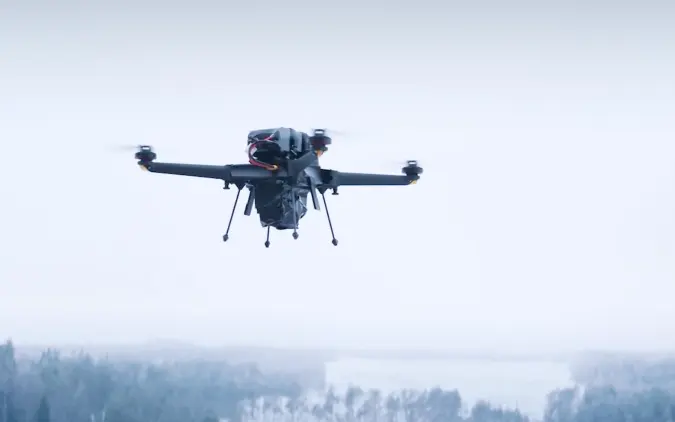
Software running on your device’s onboard computer. Run detection models, retain observations and telemetry while disconnected, and synchronise with the ground node when links return.
APPLICATION
Keep detection models relevant as field conditions change.
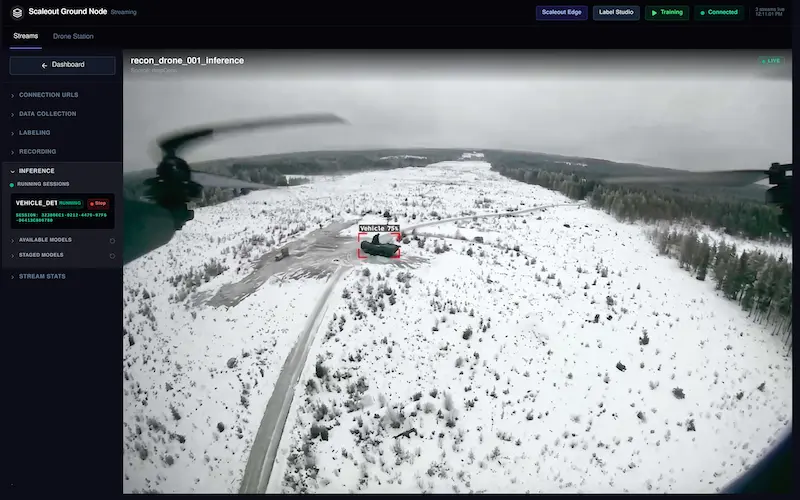
Run detection on live video for counter-UAS, ISR and range surveillance. Improve models locally, evaluate candidate updates and share approved improvements when connectivity allows, keeping sensitive footage within each site.
The field workflow
New terrain, sensor conditions and objects can expose gaps in detection performance. Monitor model health to identify changes that warrant review, and use field observations to improve models within your site.
Your team controls which updates are approved. Raw footage stays within the site.
Unlabelled imagery can also support model pre-training across participating sites through federated learning. This provides a starting point for task-specific fine-tuning, with labelled data and evaluation still part of the workflow.
Run models on video from cameras, vehicles or drones. Onboard detection continues when connections drop.
Automatically select frames where models are uncertain or encounter unfamiliar conditions, focusing human review on useful training material.
Review a prioritised queue of selected frames, focusing annotation on observations that are useful for model improvement. Add or correct labels using agreed labelling guidelines.
Train candidate models on local data. Run model versions side by side on the same sensor feeds to compare predictions, and assess performance on labelled evaluation data before approving an update.
Deploy approved models to connected devices. Coordinate shared improvements across participating sites through Scaleout Edge when connectivity allows.
Where the software runs
Three connected software roles support the workflow, from detection on your devices to local training and coordination across sites.
Edge AI Companion
Software running on your device’s onboard computer. Run detection models, retain observations and telemetry while disconnected, and synchronise with the ground node when links return.
Vision Ground Node
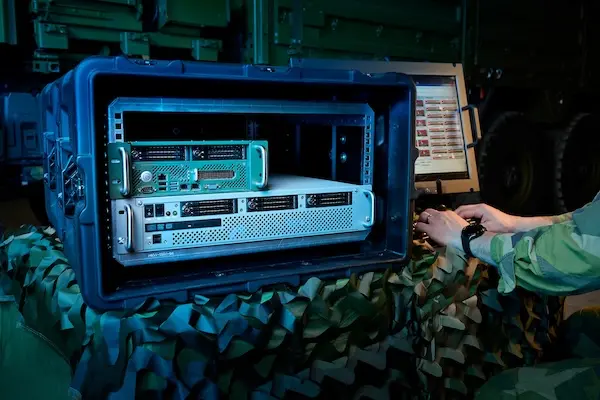
A software workbench on local GPU-equipped infrastructure. Run detection, annotate observations, and train and evaluate models even while disconnected. Synchronise updates when connectivity returns.
Scaleout Edge
Coordinate federated learning and distribute approved updates. Monitor reported model health and maintain a record of which model ran where, with what results.
Devices ↔ Local siteSelected observations move to the customer-controlled site when links are available. Approved models return to devices for local detection.
Local site ↔ Scaleout EdgeEach site trains on local footage. Federated learning combines model updates to improve a shared model without transferring raw footage between sites.
The software runs on hardware supplied by you or your chosen partners. Scaleout Edge is deployed within your chosen infrastructure. Scaleout provides the software infrastructure and engineering support for this workflow, integrated with your sensor feeds, models, computing infrastructure and operational systems.
How it fits your operation
Integrate tactical computer vision with your sensor feeds, models and operational applications. Scaleout Edge provides the model deployment, learning and coordination layer alongside your existing systems, including central model-development tools. Compatibility and compute requirements are assessed during evaluation.
Connect video from cameras, vehicles or drones through supported interfaces. Run detection on onboard compute or local infrastructure, depending on your setup.
Bring detection models from your team or chosen suppliers, or start with reference models such as YOLO. Adapt them using local observations and evaluate their suitability for your task and target hardware.
Make detections available to operator tools, including TAK through OpenTAKServer. Additional C2 connections are scoped around the interfaces and information your team needs.
Combine this workflow with onboard drone AI, integration and engineering support. Explore the Tactical AI Network solution.
For onboard inference, retained observations and model deployment to drones, explore AI for drones.
Your team retains control of operational decisions and model approvals. Your operational data and trained models remain yours.
Get started
Work with Scaleout engineers to assess tactical computer vision using your sensor feeds, models and computing infrastructure against agreed performance and operational requirements.
Choose a detection task, identify data and equipment, and agree on success criteria: detection performance, the update workflow and operation with limited connectivity.
Connect selected feeds, run detection and evaluate a local model update. Train your team or chosen partner in data review, annotation and model improvement.
Review results and plan the move from an initial workflow to field validation or broader deployment, including integration, hardware and ongoing support.
Scaleout provides software, engineering support and knowledge transfer within the agreed scope. Security requirements and accreditation support are scoped around your deployment environment. Hardware is supplied by you or your chosen partners.
Discuss an evaluation